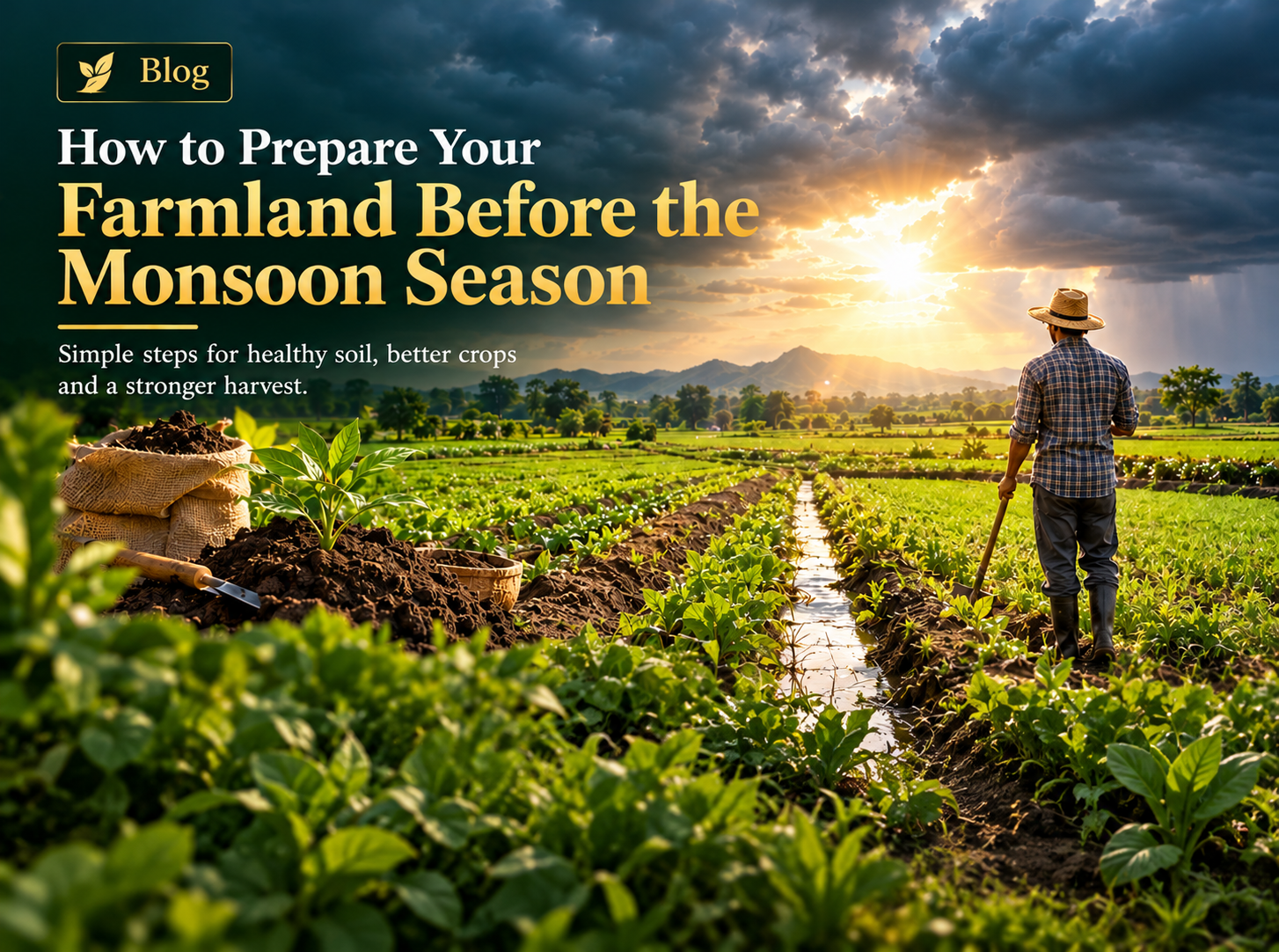
Monsoon rains can bring new opportunities for farming, but heavy rainfall can also cause waterlogging, soil erosion, and drainage problems. At Udhay Groups, we believe that proper farmland preparation is essential for responsible land management and a better farming experience.
If you are exploring the best farmland in Chennai and nearby locations, understanding how to maintain land before the monsoon can help you make a more informed decision. Follow these eight essential steps to prepare your farmland for the rainy season.
1. Check Your Farmland’s Drainage System
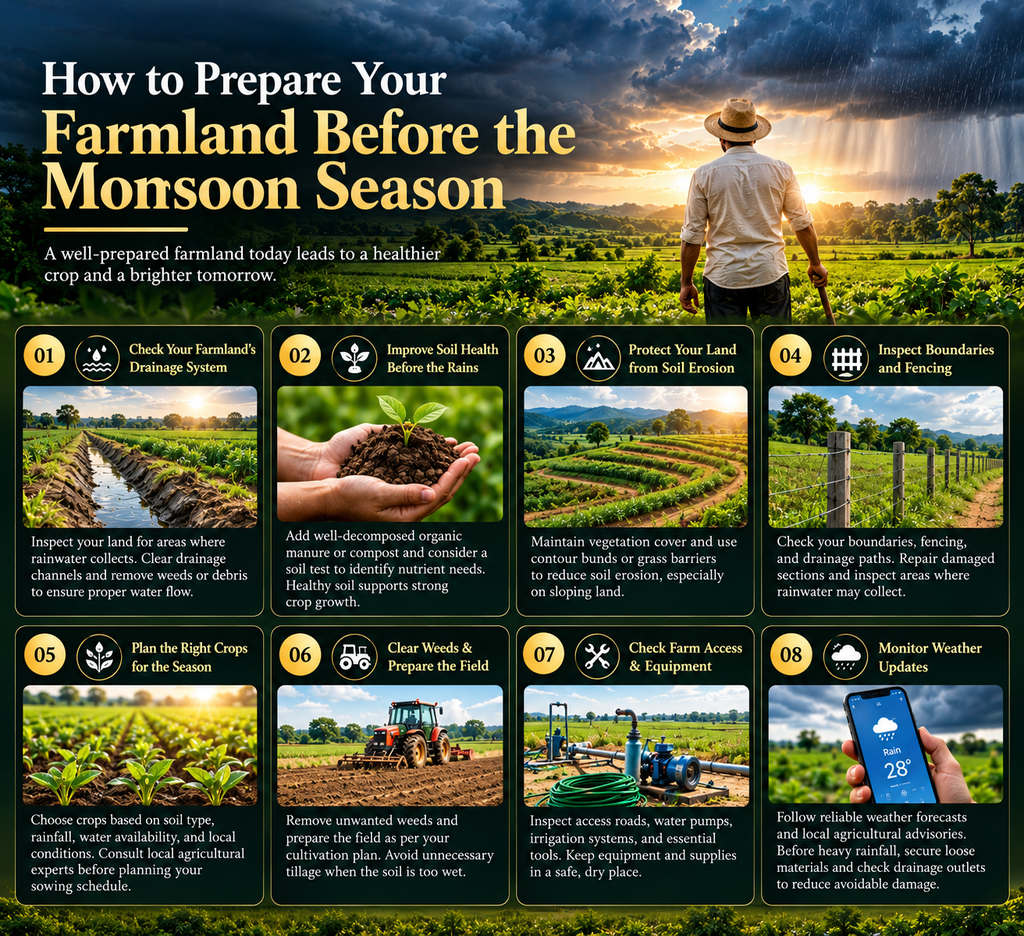
Before the monsoon begins, inspect your farmland for low-lying areas where rainwater may collect. Clear drainage channels and remove weeds, leaves, and other debris that could block water flow. Ensure that excess water can drain safely without affecting neighbouring properties. Proper drainage helps reduce waterlogging risks and protects the soil during periods of heavy rainfall.
2. Improve Soil Health Before the Rains
Healthy soil provides essential nutrients and supports strong crop growth throughout the growing season. Before the rains arrive, assess your soil condition and consider conducting a soil test to identify nutrient deficiencies. Add well-decomposed organic manure or compost according to the soil’s requirements. Additionally, suitable soil management practices can improve soil structure and help maintain balanced moisture levels.
3. Protect Your Land from Soil Erosion
Heavy rainfall can wash away fertile topsoil, particularly on sloping or exposed farmland. To minimise erosion, maintain suitable vegetation cover and avoid leaving large areas of soil exposed unnecessarily. Depending on the terrain, contour bunds, grass barriers, or other soil conservation methods may help slow water runoff. Protecting the topsoil helps preserve valuable nutrients and supports long-term agricultural productivity.
4. Inspect Boundaries and Fencing
Walk around your farmland before the monsoon and inspect boundary markers, fencing, and nearby drainage paths. Repair damaged fencing and identify weak sections where rainwater runoff could cause problems. Check whether surrounding land or access areas may direct excess water towards your property. Regular inspections help you identify maintenance concerns early and maintain clear, accessible farmland boundaries.
5. Plan the Right Crops for the Season
Choosing suitable crops before the monsoon can help farmers make better use of seasonal rainfall. Consider your soil type, expected rainfall, water availability, and the growing conditions in your local area. Select seeds based on recommended sowing periods and the needs of your intended crops. For better planning, consult local agricultural experts who understand regional farming conditions and seasonal requirements.
6. Clear Weeds and Prepare the Field
Weeds compete with crops for sunlight, water, nutrients, and growing space, so field preparation is important before planting. Remove unwanted vegetation where necessary and prepare the land according to your cultivation plan. Avoid unnecessary tillage when the soil is too wet, as this can damage soil structure and make cultivation more difficult. Preparing the field at the right time can support better crop establishment and easier farm management.
7. Check Farm Access and Equipment
Heavy rainfall can make unpaved roads, farm entrances, and pathways muddy or difficult to access. Inspect entry routes and identify areas that may become unsafe or difficult to use during wet weather. Check water pumps, irrigation systems, farming tools, and other essential equipment before the season starts. Store supplies in a safe, dry location and ensure that essential equipment is ready when it is needed.
8. Monitor Weather Updates
Monsoon conditions can change quickly, so follow reliable weather forecasts and local agricultural advisories throughout the season. Pay attention to warnings about heavy rainfall, strong winds, or possible flooding in your area. Before severe weather arrives, secure loose materials and check that drainage outlets remain clear. Taking timely precautions can help reduce avoidable damage to farmland, equipment, and stored agricultural supplies
Why Choose Udhay Groups When Exploring Farmland?
When searching for the best farmland in Chennai and surrounding areas, it is important to look beyond location and price. Assess drainage, road access, soil conditions, water availability, land-use classification, and relevant legal documents before making a purchase.
At Udhay Groups, we encourage prospective buyers to evaluate farmland carefully and understand its suitability for their intended purpose. A well-informed decision begins with checking the property’s location, accessibility, documentation, and maintenance requirements.
Conclusion: Explore Farmland Opportunities with Udhay Groups
Preparing farmland before the monsoon is an important part of responsible land management. From improving drainage and protecting soil to planning crops and monitoring weather, these eight steps can help you prepare for seasonal challenges.
Looking for the best farmland in Chennai? Explore farmland opportunities with Udhay Groups and take the next step towards finding land that suits your needs.
Visit Udhay Groups today to explore available projects and connect with our team for more details. Before investing, review the property documents, land-use details, access, and site conditions carefully.
Udhay Groups — Explore Your Land Opportunities with Confidence.